
Industry Insights
Category
Industry Insights
Published
A MIT study found that 95 percent of enterprise generative AI investments delivered no measurable financial return. The figure points to a widening gap between how the market defines progress and what enterprises actually need from AI.
Across commerce, much of the conversation still centers on generation quality. Vendors compete over sharper product images, more accurate garment details, better fabric textures, and logos that remain intact. Those improvements matter. A distorted silhouette, inaccurate shade, or misplaced logo can make an otherwise polished asset unusable.
But once the image looks right, what comes next?
Most enterprises are not adopting AI to become experts at producing AI-generated content. They are investing in it to reduce operational costs, shorten production timelines, and ease the burden on internal teams.
A high-quality asset contributes to those goals only if it can move efficiently through the work that surrounds it. It still needs accurate product information, appropriate styling, brand approval, regional adaptation, and a clear path to deployment. If every step requires manual intervention or disconnected review, the business may generate content faster without materially improving how it operates.
This is the gap many pilots fail to address. They prove that AI can produce a convincing result, but they rarely show whether that result can fit into the systems, standards, and decisions that determine its business value.
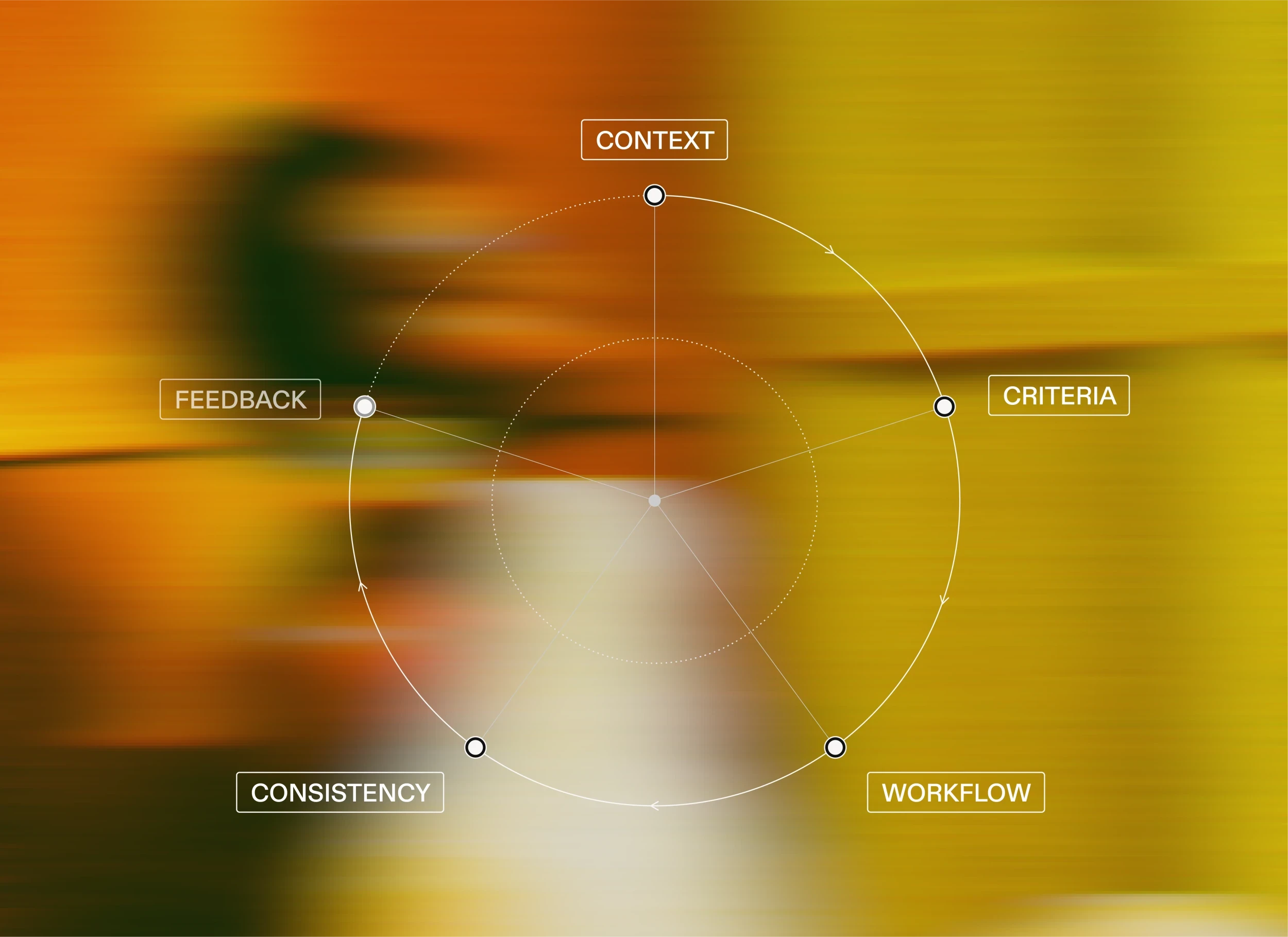
For enterprise AI to deliver measurable returns, five conditions need to work together.
A shared foundation of product and brand context
AI cannot represent a product consistently when essential information is scattered across teams and tools. A garment’s material may be described differently in a product listing and a campaign. A beauty product’s shade may appear inconsistent across channels. A piece of furniture may be shown in a setting that misrepresents its scale.
Product attributes, imagery, materials, brand standards, and merchandising context need to form a shared foundation. Otherwise, every output begins with a different understanding of the product and creates additional work later.
Standards that guide execution
Brand consistency cannot depend on someone catching every mistake after an asset is produced. Creative guidelines, product representation rules, and market requirements should shape the work from the start.
When those standards live in static documents, email threads, or individual experience, teams repeatedly reconstruct the same decisions. Embedding that judgment into execution reduces unnecessary revisions and gives teams a clearer basis for review.
Workflows that reflect real operations
Producing an image in minutes creates limited value if approvals take days and deployment still requires multiple disconnected handoffs. The bottleneck moves, while the total cost of getting work to market remains largely unchanged.
Enterprise AI needs to fit into how creative, merchandising, legal, and regional teams operate. Connecting those functions helps reduce coordination overhead and makes faster production relevant to the wider business.
Adaptation across markets and channels
A campaign approved in one region may require different imagery, product claims, or styling elsewhere. A retail partner may also need a different format from the brand’s own ecommerce site.
Those variations should not force teams to rebuild the product context or repeat decisions that have already been made. A connected system makes adaptation more efficient while preserving the underlying product information and brand standards.
Learning that strengthens the next cycle
Every approval, revision, localization choice, and customer response reveals something about how the brand operates. A rejected claim establishes a boundary. An approved styling decision clarifies a preference. Performance across markets indicates which approaches resonate.
When that information remains isolated, the same questions return with every campaign. When it feeds back into the system, each production cycle strengthens the company’s product, brand, and operational intelligence.
Together, these conditions make AI useful beyond the moment of generation. Product context informs execution, brand judgment guides decisions, and market feedback improves what comes next. The result is an operating model that can reduce repeated work, support more efficient production, and retain knowledge that would otherwise disappear between teams.
Arden connects these elements within one system, helping brands turn everyday execution into a growing foundation of intelligence.
The goal was never simply to produce better AI-generated content. It was to make the business work better and learn more from every decision.

Build the intelligence layer behind your brand.
Start with creative production. Build the product and brand intelligence that powers how your brand operates how the world discovers what you sell.