
Industry Insights
Category
Industry Insights
Published
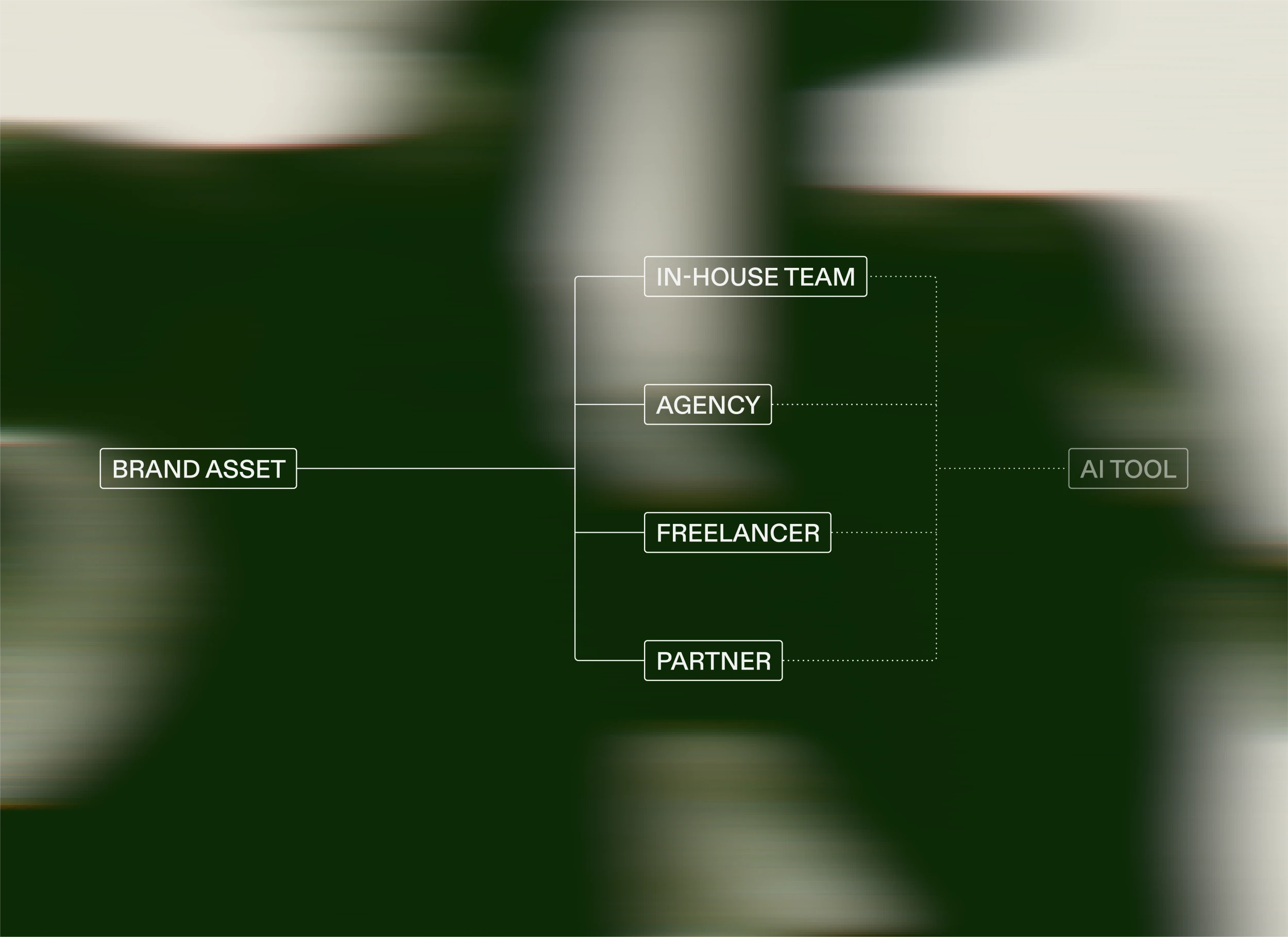
A beauty brand is preparing a campaign for an unreleased product. A regional team uploads packaging images to an AI design platform to test social concepts. An agency uses another tool to generate campaign backgrounds, while a freelance editor imports unreleased footage into separate software to produce localized videos.
Each team is moving the campaign forward. Before the work reaches approval, however, the same confidential materials may already exist across external platforms, agency workspaces, and personal accounts.
Does the brand still know where those assets are, who can access them, and which conditions govern their use?
AI adoption is spreading across the production chain
Creative teams rarely adopt AI through a single, coordinated decision. Social teams select tools that produce variations quickly. Agencies use applications included in their existing subscriptions. Freelancers rely on familiar software to meet immediate deadlines.
These choices reflect how creative work actually happens. They also move brand assets through environments with different access controls, retention policies, and commercial terms.
A tool suitable for editing publicly available product imagery may be inappropriate for unreleased packaging or licensed photography. An enterprise workspace may offer controls that are unavailable through a personal account. A free service used by an external contractor may operate under entirely different data conditions.
As AI becomes embedded across production, the governance question extends beyond which tools a company has officially approved. Brands also need visibility into how their assets move through the wider network of people and platforms involved in the work.
Creative assets carry commercial information
An unreleased product photograph can reveal an upcoming collection, packaging, or design direction. A campaign brief may include launch dates, pricing, audience strategy, or an unannounced partnership. Even a draft product description can expose claims that have not yet been approved.
The risks vary by category. Fashion imagery may disclose a new silhouette before a collection launches. Beauty campaigns can contain sensitive product claims or packaging designs. Lifestyle brands may share unreleased environments, merchandising plans, or retailer-specific creative concepts.
Once these materials enter an external service, the relevant governance questions become practical: Who owns the account? Which users can access the workspace? How long are uploaded files retained? Can they be removed? Do the platform’s terms permit the intended commercial use?
Those answers may differ between an enterprise subscription, a personal account, and a free service used by an outside contractor.
Ownership and permission are different questions
An unreleased product image reveals more than its appearance. It may expose an upcoming collection, packaging design, launch strategy, or merchandising direction. A campaign brief can contain pricing, audience plans, product claims, and unannounced partnerships.
The risks vary by category. Fashion imagery may reveal a new silhouette before launch. Beauty materials can contain unapproved claims or confidential packaging. Lifestyle campaigns may disclose unreleased environments or retailer-specific concepts.
Once these materials enter an external platform, control depends on practical details:
Who owns the account?
Who can access the workspace?
How long are uploaded files retained?
Can the files be fully removed?
Do the platform’s terms permit the intended commercial use?
If a brand cannot answer these questions, it may approve the final campaign without understanding how the original assets were handled along the way.
Ownership does not remove usage restrictions
A brand may commission a campaign while holding limited rights to some of its components.
A model agreement may permit use in selected markets. A photographer’s license may restrict image modification. A retail partner may provide product photography for a specific campaign, channel, or period.
Those conditions continue to apply when the asset enters an AI workflow. A generated variation may still depend on source material with restrictions on geography, duration, alteration, or distribution.
This becomes more complex as teams adapt the same asset across channels. An image approved for a brand’s ecommerce site may require separate permission before appearing in paid media, on a retailer marketplace, or in another region.
Effective governance therefore requires visibility into both the asset and the rights attached to it.
External collaboration can blur accountability
Agencies and freelancers often manage essential stages of production, but their workflows may extend beyond the systems visible to the brand.
An agency may transfer files to a subcontractor. A regional partner may upload campaign materials through a personal account. An editor may retain access to a shared workspace after the project ends.
These gaps become difficult to manage when a campaign is withdrawn, a license expires, or a launch plan changes. Without a clear record of where an asset traveled, teams may struggle to identify which versions remain accessible, who is responsible for removing them, and whether they have been used elsewhere.
Accountability depends on tracing the full path of the asset rather than reviewing only the final deliverable.
Governance has to follow the asset
A practical governance framework begins by classifying the material. Public product imagery, confidential campaign drafts, licensed photography, and partner-provided assets each require different handling conditions.
Those classifications should determine which tools and accounts can be used, who receives access, which rights must remain attached to the file, and when additional approval is required. The same expectations need to apply across internal teams, agencies, contractors, and regional partners.
Brands also need a record of how each asset is used: where it came from, which permissions apply, who adapted it, which tools processed it, and where it can be deployed.
As creative production becomes distributed across more AI tools and external partners, control will depend on maintaining these boundaries wherever the asset travels.
The defining question is no longer simply who created the image. It is whether the brand can still account for what entered the system, who handled it, what they were allowed to do with it, and where it went next.

Build the intelligence layer behind your brand.
Start with creative production. Build the product and brand intelligence that powers how your brand operates how the world discovers what you sell.